Pet
Find Pet Hospitals – Your Complete Guide to Quality Veterinary Care

Finding quality veterinary care shouldn’t be stressful—your pet deserves safe, compassionate, and reliable medical support. Whether you’re searching for emergency vet services, routine checkups, or specialty treatments, knowing how to find pet hospitals quickly and confidently makes all the difference. As pet owners, we understand that animals aren’t just companions—they’re family. And just like every family member, they need access to proper medical attention throughout their lives. From preventive wellness to advanced diagnostics, choosing the right hospital ensures your pet receives the care they need at every stage.
This comprehensive guide walks you through how to identify reputable hospitals, what services they provide, and how to make the best decision for long-term pet health.
Understanding the Importance of Choosing the Right Pet Hospital
Selecting the right veterinary hospital affects more than just routine visits—it directly influences your pet’s overall well-being. A reliable hospital provides not only medical treatment but also peace of mind. You want a facility that treats your pet with compassion, uses modern technology, and employs highly trained veterinarians who understand both common and complex conditions.
A good pet hospital becomes your partner in your animal’s health journey. When emergencies happen, or when your pet gradually develops age-related issues, you’ll want a trusted team ready to respond. This partnership also helps prevent illnesses through annual exams, early disease detection, and personalized wellness plans.
Choosing wisely ensures your pet receives safe, ethical, and effective care throughout their lifetime.
Key Services Offered at Most Pet Hospitals
Although every veterinary hospital varies, most offer a similar structure of essential services. Understanding these categories helps you evaluate whether a particular facility is properly equipped to care for your pet.
1. Routine and Preventive Care
This is the backbone of every pet’s long-term health. Routine services typically include wellness exams, vaccinations, dental cleanings, parasite prevention, and nutritional counseling. Preventive care helps your pet avoid diseases before they develop and ensures early detection of any emerging conditions.
2. Emergency and Urgent Care
Animals can experience sudden injuries, toxic exposures, or acute medical crises. Hospitals with emergency departments offer immediate treatment for life-threatening conditions. Look for facilities that provide after-hours or 24/7 care if your pet has chronic issues or is at higher risk for emergencies.
3. Diagnostic Testing
A hospital with strong diagnostic capabilities—such as X-rays, ultrasounds, bloodwork, and advanced laboratory services—is invaluable. These tools help veterinarians identify internal problems quickly and accurately.
4. Surgery and Specialty Procedures
From routine spaying and neutering to orthopedic surgeries, you’ll want a hospital with skilled surgeons and modern operating rooms. Some hospitals also provide specialty procedures like advanced imaging, oncology, cardiology, and dermatology.
5. Dental Care
Pet dental health is often overlooked, yet it’s crucial to prevent infections, tooth decay, and systemic problems. Hospitals offering full dental services—including cleaning, extractions, and X-rays—support overall wellness.
6. Rehabilitation and Therapy
Some facilities offer physical therapy, hydrotherapy, acupuncture, or laser therapy, especially helpful for aging pets, post-surgical recovery, or chronic pain management.
What to Look for When You Want to Find Pet Hospitals Near You
Searching for a veterinary hospital can be overwhelming, especially if you’re unsure what to prioritize. Here are essential factors to consider when evaluating options.
Experienced Veterinarians and Skilled Staff
A reputable hospital employs licensed, experienced professionals who continuously stay updated with veterinary advancements. Certifications, specializations, and professional memberships are signs of commitment to quality care.
Clean, Safe, and Modern Facilities
The overall environment reflects the hospital’s professionalism. Clean lobbies, sanitized exam rooms, updated equipment, organized treatment areas, and safe kennels indicate a high standard of care.
Transparent Pricing and Treatment Plans
Reliable hospitals provide clear communication about costs, recommended procedures, and available options. Transparency builds trust, especially during emergencies when decisions must be made quickly.
Positive Reviews and Community Reputation
Online feedback, recommendations from local pet owners, and the hospital’s involvement in community animal welfare initiatives are strong indicators of credibility.
Accessibility and Communication
Hospitals that offer easy appointment scheduling, online portals, extended hours, or emergency lines add convenience to your pet’s care. Communication matters—staff should be polite, attentive, and patient when explaining your pet’s condition.
Benefits of Using Online Platforms to Find Pet Hospitals
In the digital age, many pet owners rely on online tools to identify trusted veterinary clinics. Platforms like VetToday simplify the process by gathering hospital information in one place, allowing you to compare facilities, services, credentials, and reviews.
Using an online directory helps you:
- Save time when searching for qualified hospitals
- Review services before calling or visiting
- Find emergency or specialty hospitals instantly
- Access verified information rather than relying on guesswork
These platforms are especially helpful if you’re new to a city, traveling with your pet, or need urgent care outside your usual clinic’s hours.
How to Evaluate the Right Pet Hospital for Your Needs
Finding the “best” pet hospital isn’t about choosing the biggest or most expensive facility—it’s about finding the right match for your pet’s health needs and your expectations. You can evaluate options through:
Initial Consultations
Schedule a basic wellness exam to assess the hospital’s environment, professionalism, and handling of your pet. This gives firsthand insight before committing long-term.
Questions to Ask
- Do they offer emergency or after-hours care?
- What diagnostic tools do they have on-site?
- How experienced are the veterinarians with your pet’s breed/species?
- What is their pain management approach?
- Do they create personalized wellness plans?
Clear and confident answers indicate strong operational standards.
Medical Philosophy
Some hospitals emphasize holistic treatments, while others focus on high-tech solutions. Choose a hospital that aligns with your preferences and your pet’s unique health needs.
Availability of Follow-Up Support
Post-treatment follow-up is essential, especially after surgery, dental work, or chronic illness care. Great hospitals ensure ongoing communication to monitor your pet’s condition.
Why Finding the Right Pet Hospital Matters for Long-Term Pet Health
Pets experience different health challenges over their lifetime. Puppies and kittens need vaccines and early development checks. Adult pets face weight issues, allergies, or genetic predispositions. Senior pets commonly develop arthritis, organ issues, or mobility challenges.
A dependable pet hospital builds a complete medical history, enabling early detection and effective treatment. This long-term relationship supports preventive care, reduces emergency risks, and promotes a healthier, longer life for your pet.
Final Thoughts
Finding the right veterinary care is one of the most important decisions you’ll make as a pet owner. When you know how to find pet hospitals, understand the services they offer, and recognize what to look for in a trustworthy facility, you can confidently protect your animal’s health and happiness.
For pet owners seeking a reliable and convenient way to locate trusted veterinary services, VetToday offers one of the best online tools. Visit them at the end of this guide as you explore the right hospital for your pet’s needs.


Bringing home a new puppy is one of life’s greatest joys. The floppy ears, the puppy breath, the tiny paws pattering across the floor—it’s enough to melt anyone’s heart. But along with the snuggles comes the reality of raising a dog. Suddenly, you’re dealing with sharp teeth on your furniture, puddles on the rug, and a level of energy that seems limitless.
Whether you’ve just adopted a rescue from the local shelter or picked up a purebred pup, the first few months are critical for establishing good habits. Raising a well-behaved dog isn’t just about teaching them to sit or stay; it’s about building a relationship based on trust and communication. If you are located on the coast of North Carolina, navigating puppy training in Onslow County, NC, offers unique opportunities and challenges, from the distractions of beach days to the specific socialization needs of our community.
This guide will walk you through the essentials of puppy training, why local expertise matters, and how to set your four-legged friend up for a lifetime of success.
Why Early Training Matters
Many new dog owners make the mistake of waiting until their puppy is “old enough” to start training. The truth is, training begins the moment you bring them home. Puppies are like sponges, soaking up information about their environment constantly. Every interaction you have with them teaches them something, whether you intend to or not.
Early training provides a framework for your puppy to understand the world. It builds confidence and helps prevent behavioral issues that can be much harder to fix later in life.
Socialization is Key
Between 8 and 16 weeks of age is a critical socialization window. During this time, positive exposure to new people, other dogs, sounds, and environments can shape their temperament for life. In a vibrant area like Onslow County, you want a dog that is comfortable with the sights and sounds of military aircraft overhead, busy parks, and friendly neighbors.
Establishing Boundaries
Puppies need to know what is expected of them. Without clear guidance, they will create their own fun—usually at the expense of your shoes or baseboards. Consistent training establishes boundaries in a way that your dog understands, reducing frustration for both of you.
Core Pillars of Puppy Success
Successful training isn’t magic; it’s consistency, patience, and positive reinforcement. Here are the foundational elements every puppy parent should focus on.
Potty Training
This is often the biggest hurdle for new owners. The key is a strict schedule. Take your puppy out first thing in the morning, after every meal, after naps, and before bed. Praise them lavishly when they go outside. Accidents will happen, but punishment is rarely effective. Instead, focus on rewarding the behavior you want to see.
Crate Training
A crate isn’t a cage; it’s a haven. When introduced correctly, a crate provides a sense of security for your dog and aids significantly in potty training. It keeps them safe when you can’t supervise them and prevents destructive behaviors born out of boredom or anxiety.
Bite Inhibition
Puppies explore the world with their mouths. Those needle-sharp teeth hurt, but it’s a natural behavior. Teaching bite inhibition involves letting your puppy know when they are playing too roughly. Redirecting their biting to appropriate toys is crucial.
Basic Commands
“Sit,” “Stay,” “Come,” and “Leave it” are more than just party tricks; they are safety tools. A dog that comes when called is a dog that can be kept out of dangerous situations.
The Benefits of Professional Guidance
While there are countless books and videos available, nothing replaces the hands-on guidance of a professional. Every dog is an individual, and what works for one might not work for another. A professional trainer can observe your dog’s body language and tailor their approach to your specific situation.
This is where finding the right support for puppy training in Onslow County, NC, becomes essential. Local trainers understand the specific lifestyle of the area. They know the best local spots for socialization and the common distractions your dog will face.
Programs like those offered by Wild Child Dog Training are designed to bridge the communication gap between you and your pet. They don’t just train the dog; they train the human. Learning how to communicate effectively with your dog is the most valuable skill you can acquire. Professional trainers provide accountability and support when you hit those inevitable training plateaus.
Navigating the “Teenage” Phase
Just when you think you have it all figured out, adolescence hits. Usually occurring between 6 and 18 months, this phase is characterized by a sudden “forgetfulness” of commands, increased independence, and sometimes, a bit of rebellion.
This is a common time for owners to feel overwhelmed. It’s important to remember that this is a developmental stage, not a failure on your part. Consistency is more important than ever during this time. Reinforcing the basics and maintaining your routine will help you ride out the storm.
Professional training can be a lifesaver during the adolescent phase. Group classes, for instance, offer a controlled environment where your dog can learn to focus on you despite the presence of other dogs—a skill that is invaluable for walks in public.
Training for the Onslow County Lifestyle
Living in Onslow County means access to beautiful outdoor spaces. Whether you’re heading to Hammocks Beach State Park or taking a stroll down the Jacksonville Greenway, you want a dog that is a joy to bring along.
Leash Manners
A dog that pulls on the leash turns a relaxing walk into a chore. Teaching loose-leash walking makes exercise enjoyable for both of you. It prevents injury to your dog’s neck and saves your arm from being pulled out of its socket.
Recall Reliability
If you plan to enjoy off-leash areas or hiking trails, a solid recall is non-negotiable. Your dog must return to you immediately when called, regardless of distractions like squirrels or other hikers.
Public Etiquette
Taking your dog to a brewery or a cafe requires good manners. They need to be able to settle calmly at your feet and not jump on the server or bark at passersby. Socialization classes often mimic these real-world scenarios to help your dog succeed.
Choosing the Right Trainer for You
When looking for puppy training in Onslow County, NC, do your research. Look for trainers who use science-based, positive reinforcement methods. These methods build a bond of trust rather than fear.
Ask questions about their philosophy and experience. A good trainer will be transparent about their methods and happy to discuss your specific goals. Wild Child Dog Training focuses on creating a balanced relationship, understanding that a “wild child” often just needs the right direction and outlet for their energy.
Don’t be afraid to ask for references or observe a class before signing up. You want to ensure that the trainer’s style meshes well with your personality and your dog’s needs.
Building a Bond That Lasts a Lifetime
Puppy training in Onslow County, NC, is an investment in your future together. The time and effort you dedicate today build the foundation for a lifetime of trust, confidence, and clear communication. A well-trained dog is a free dog—free to join you on adventures, free to greet guests politely, and free to be a fully integrated member of your family.
The journey of puppy training in Onslow County, NC, is filled with ups and downs, but the reward is a companion who understands you and looks to you for guidance. Don’t wait for behavioral problems to arise before seeking help. Be proactive, be patient, and enjoy the process of watching your puppy grow into a wonderful dog.
If you’re ready to transform your chaotic pup into a well-behaved companion, reach out to local experts like Wild Child Dog Training. They have the tools and experience to guide you through every stage of your puppy’s development.
Contact Info
Name: Wild Child Dog Training
Address: 491 Smith Rd, Maysville, NC 28555
Phone: (910) 378-9377
Website: https://wcdogtraining.com/
Email: training@wcdogtraining.com
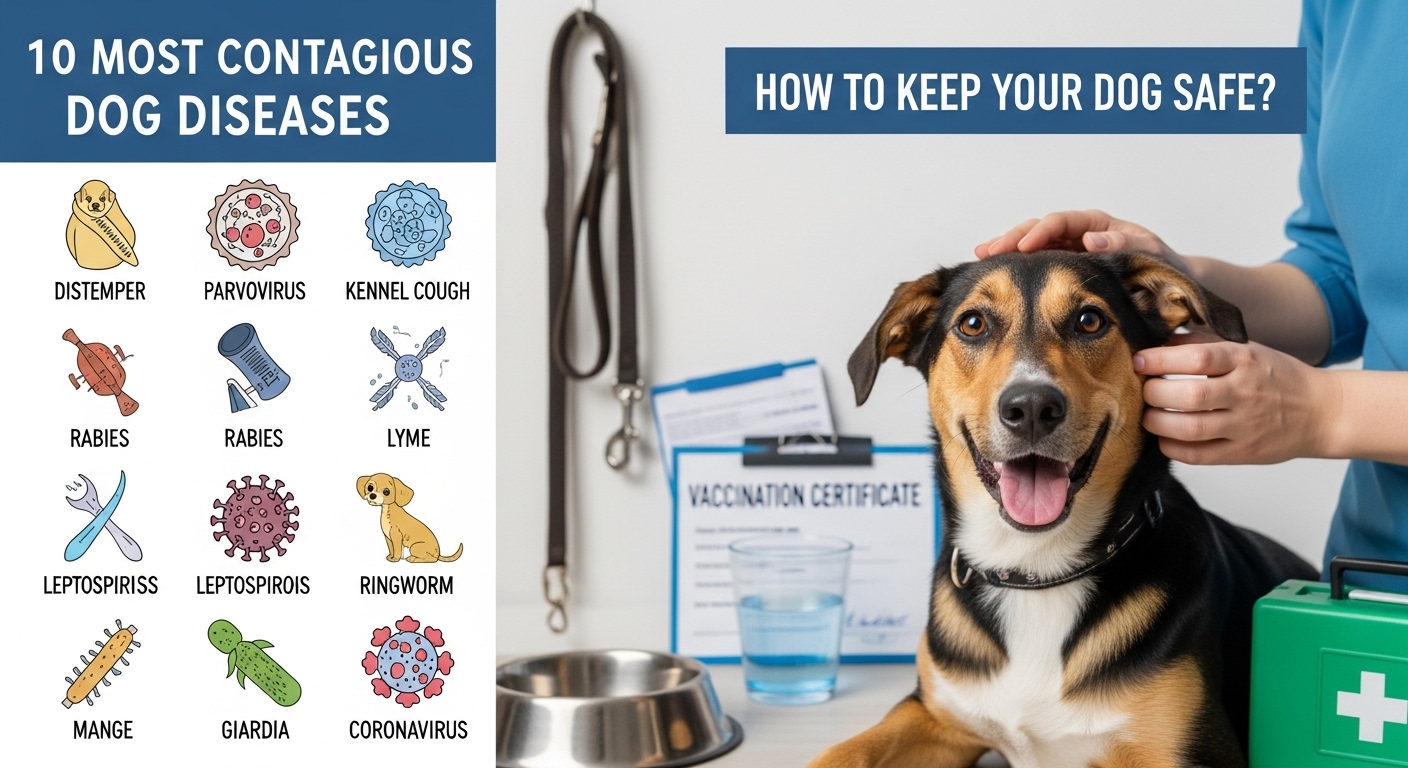
Parenting dogs comes with a world of responsibilities. The furry beings are vulnerable to several highly contagious diseases that tend to spread through social settings like parks, kennels or grooming facilities, posing serious risks. If you’re new to dog parenthood and worried about the contagious diseases that might affect your pooch, don’t worry, as we’re here to help. In this blog, we will explore the top 10 most contagious canine diseases while detailing their symptoms, transmission and prevention so as to help you safeguard your furry baby.
Let’s get started!
Top 10 Most Contagious Dog Diseases
Here are the most contagious canine diseases that you need to keep your dog safe from.
1. Sarcoptic Mange
Sarcoptic Mange, also known as Canine Scabies, is a highly contagious disease in dogs and easily spreads to other dogs, various wildlife creatures and humans. It is commonly transmitted through skin-to-skin contact with an infected animal, generally during play and grooming. The mites burrow into the skin of their hosts and lay eggs, triggering a severe allergic reaction and intense itching. There is a wide range of oral and topical flea and tick treatments formulated to treat the infections. The common ones include Nexgard, Bravecto, Simparica and Revolution.
2. Parvovirus
Parvovirus is a highly contagious disease that spreads orally through oral or fecal transmission. The virus tends to attack puppies and subject them to severe diarrhea, vomiting and regurgitation, which can even lead to dehydration and death of the small canines. To protect your pups from this harmful virus, it is highly important that you get them vaccinated against it at an early stage. Also, if your dog gets affected by this virus, make sure to keep them hydrated and provide them with plenty of nutrients.
3. Distemper
Distemper is a deadly and highly contagious canine disease. It transmits via bodily secretions and leads to gastrointestinal upsets, neurologic issues and affects the respiratory system, causing dogs to experience seizures and death. Fortunately, there is a vaccination against this disease that is extremely safe and works effectively to keep your pooch protected.
4. Leptospirosis
Leptospirosis is a zoonotic bacterial disease transmitted through water or soil contaminated with the urine of infected animals such as rodents. Dogs affected with this disease may be asymptomatic or experience multi-organ failure and even death. Signs of Leptospirosis may vary from dog to dog and include fever, lethargy, loss of appetite, vomiting, muscle pain, diarrhea, increased thirst and urination, and breathing difficulties. If treated early, dogs can recover from the disease. However, the recovery can take a very long time and some canines may experience lingering effects.
5. Coronavirus
The highly infectious viral disease primarily affects the gastrointestinal and respiratory systems of dogs. It spreads mainly via the fecal-oral route or through contact with contaminated surfaces, such as food bowls. The virus can also be transmitted through coughing, sneezing or direct contact between dogs in settings such as shelters, boarding kennels, dog shows, dog cafes and dog parks. Thankfully, vaccines are available to help protect dogs against coronavirus, although they are not known to be fully effective. If your dog contracts the virus, you must quarantine it from other pets for at least 2 – 3 weeks to prevent outbreaks.
6. Herpesvirus
The highly contagious viral infection affects dogs of all ages but is most dangerous for newborn puppies. Puppies are generally infected in utero, during passage through the birth canal, or via contact with the mother’s oral and nasal secretions after birth. When it comes to adult dogs, transmission primarily occurs during licking, sniffing or contact with nasal and genital secretions. Older dogs may show symptoms such as mild fever and respiratory issues. For neonatal puppies, there is usually no cure for this viral infection. However, supportive care may include external warming and anti-viral formulas.
7. Ringworm
Ringworm is a fungus that causes a dog skin problem. The infection is contagious but generally doesn’t affect healthy dogs. It is more common in puppies and senior canines with underlying r health issues. The infection is most commonly seen in shelter settings and spreads through direct contact. Ringworms primarily affect the skin, hair follicles and claws. Symptoms may vary depending on the severity and location of the infection. Ringworms in dogs can be treated with the help of topical and oral treatments designed to eliminate the contagious fungal spores. Treatment can take from weeks to months and should not be stopped until your veterinarian confirms the infection is completely cleared.
8. Rabies
Rabies is an invariably fatal disease that attacks a dog’s central nervous system. The virus is primarily spread through the saliva of an infected animal, mostly during a bite. Transmission can also occur if infected saliva comes in contact with open scratches. Symptoms can include behavioral changes, fever and biting at the wound site. Unfortunately, there is no known cure for rabies once symptoms appear, making vaccination mandatory. If you or your pet has been bitten by a dog, wash the wound with an antiseptic solution and seek immediate medical or veterinary help.
9. Hepatitis
Hepatitis is a contagious disease in dogs that spreads through the saliva and other body secretions. It can lead to liver inflammation that can even be fatal. Symptoms of Hepatitis include lethargy, loss of appetite, vomiting, diarrhea, jaundice and seizures. The disease can be difficult to treat, making vaccination crucial during the early stage of a dog’s life.
10.Kennel Cough
As the name suggests, Kennel Cough is generally transmitted in places where multiple dogs gather, such as kennels, dog groomers or dog parks. The infection is not caused by a single microorganism but by a combination of around 10 – 20 different bacteria and viruses, which can lead to coughing. Kennel Cough can be prevented with timely vaccination. You can take your vet’s advice to determine which vaccination will be appropriate for your pooch,
Wrapping Up
The above-mentioned contagious dog diseases pose severe risks, especially to unvaccinated puppies and vulnerable canines. By prioritizing core vaccines and seeking prompt veterinary care at the first sign of symptoms, you can help protect your furry babies from these potentially fatal diseases.
-
 Blog4 months ago
What Is i̇ns? Exploring Its Origins, Usage, and Symbolism
-
 Blog1 year ago
Jememôtre: A Hidden Gem in the World of Culture
-

 Technology4 months ago
100GBASE-ZR4 Optical Modules: A Practical Long-Reach Solution for Modern Data Center Interconnects
-

 Business3 months ago
Essential Online Banking Security Tips to Protect Your Finances
-

 Technology5 months ago
Cartetach: The Next Big Thing in Digital Communication
-

 Technology5 months ago
Rgarrpto: Understanding Its Impact on Modern Technology
-

 Life Style4 months ago
Taylor Breesey Face Reveal: Everything Fans Need to Know
-

 Blog4 months ago
Daniel R Locke Virtual AIA: A Complete Profile and Career Overview