
Technology
Service Schedule Software for Streamlined Fleet Maintenance and Compliance

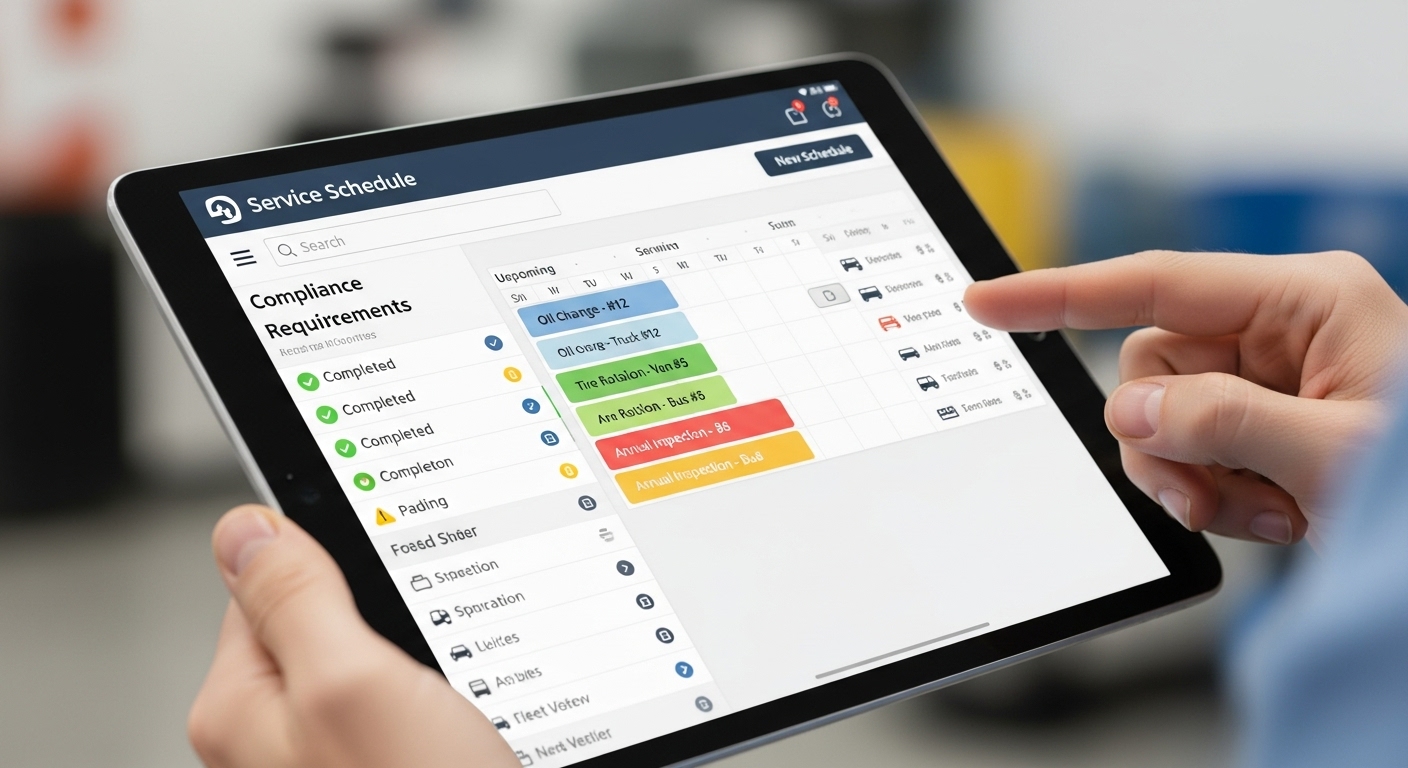
You need a system that keeps jobs, crews, and bookings aligned without wasting time on phone tag or double bookings. Service schedule software centralizes appointments, automates dispatch, and gives you real-time visibility so you can assign the right technician to the right job and reduce travel and downtime.
This post breaks down the core features that matter—calendar and route optimization, mobile access, job and asset tracking, and customer notifications—and shows practical steps to implement the tool with minimal disruption. Expect clear guidance on choosing software, getting your team onboard, and tuning workflows so your schedule actually works for you.
Core Features of Service Schedule Software
You get tools that cut manual work, match the right technician to each job, synchronize calendars, and keep customers and staff informed. These capabilities reduce missed appointments, improve on-time arrival rates, and make daily planning predictable.
Automated Appointment Scheduling
Automated appointment scheduling assigns jobs based on skills, location, availability, and priority rather than relying on manual entry. You can set rules — travel-time buffers, minimum job duration, and buffer windows for prep or cleanup — so the system only books feasible slots.
Look for features that support self-service booking for customers along with back-office overrides. The software should offer conflict detection (double-book, overtime) and an easy drag-and-drop reschedule interface for dispatchers.
Also check for load-balancing algorithms that prevent repeatedly giving complex jobs to the same technicians. Reporting on appointment lead time, cancellations, and no-shows helps you tune booking rules and improve utilization.
Resource Allocation and Management
Resource allocation lets you assign technicians, vehicles, and specialized equipment to jobs while tracking capacity in real time. You should be able to define technician skill profiles, certifications, and equipment compatibility so the system only proposes qualified matches.
Inventory-aware scheduling ties spare parts and tools to appointments, flagging jobs that lack required parts before dispatch. That reduces wasted trips and emergency returns.
Use dashboards that show resource status (on job, en route, available) and constraints like work-hour limits or union rules. Automated suggestions for overtime, subcontracting, or reassigning jobs can appear when capacity gaps threaten SLAs.
Calendar Integration
Calendar integration syncs service schedules with Google Calendar, Outlook, and mobile calendars so technicians and office staff see the same appointments. Two-way sync keeps updates consistent: when you reschedule in the field, the central calendar reflects the change instantly.
Include time-zone handling and travel time calculations so appointments display correctly for remote teams. Color-coding, filters by team or region, and layered views (day/week/route) help you visualize workload and spot gaps or over-concentration.
APIs and iCal support allow integration with third-party tools and enterprise calendar systems. Make sure the solution preserves metadata (customer address, job notes, attachments) during syncs to avoid loss of context.
Custom Notifications and Reminders
Custom notifications let you tailor messages for technicians, dispatchers, and customers with triggers like booking confirmations, arrival windows, or job completion. You can choose channels — SMS, email, push — and set templates that include ETA, job scope, and safety notes.
Two-way messaging and read-receipts improve accountability; technicians can confirm acceptance or request help directly from the alert. For customers, automated reminders (24 hours, 2 hours) plus one-click reschedule links lower no-shows.
Ensure the system supports localization (language, number formats) and compliance with messaging regulations. Audit logs for sent messages help resolve disputes and track communication performance.
Implementation and Best Practices
Implement the software with clear integration points, stepwise rollout, and measurable success metrics. Prioritize data flows, user readiness, and ongoing tuning to keep schedules accurate and reliable.
Integration With Business Software
Map the systems that must exchange data: CRM, ERP, accounting, inventory, and GPS/telematics. Identify specific data elements (customer ID, asset ID, appointment status, parts SKU) and define field-level mappings before any development starts. Use APIs or middleware that support REST/JSON and webhook events for real-time updates; batch imports through CSV or SFTP are acceptable only for low-frequency data.
Plan authentication and roles across systems so a technician’s status in the field automatically updates job records and invoices. Create end-to-end test cases that cover common flows (new job → dispatch → completed → invoice). Maintain a change-log and version the integration code to simplify rollback and audits.
User Training and Onboarding
Start training with role-based curricula: dispatchers learn schedule optimization and conflict resolution, technicians learn mobile job handling and e-signatures, and supervisors learn reporting dashboards. Use a mix of short video demos (3–7 minutes), hands-on sandbox sessions, and step-by-step quick reference guides tailored to each role.
Run a pilot with a small team for 2–4 weeks to capture real-use questions and refine workflows. Track adoption metrics such as mobile login rate, completed job confirmations, and scheduling exceptions. Offer in-app contextual help and a ticketed support channel for escalation during the first 90 days.
Security and Data Protection
Classify the data the software will store: PII, payment data, asset identifiers, and GPS traces. Enforce encryption in transit (TLS 1.2+) and at rest (AES-256) for sensitive fields. Require strong password policies and support SSO via SAML or OAuth2 to centralize access control.
Apply role-based access controls (RBAC) so users see only necessary fields and jobs. Log all access and schedule changes with timestamps and user IDs for auditability. Maintain a data-retention policy and secure deletion procedures to comply with regulations like GDPR or CCPA where applicable.
Performance Optimization Tips
Monitor key KPIs: API latency, mobile sync time, dispatch queue processing, and schedule compute time. Set alert thresholds (e.g., API 95th percentile > 500 ms) and baseline performance before major changes. Use indexed database fields for frequent queries such as technician availability and nearby jobs.
Optimize scheduling algorithms by limiting candidate technicians with simple pre-filters (certification, location radius, parts on board) before running expensive optimization. Cache relatively static reference data (service durations, travel times) and invalidate caches when business rules change. Conduct load tests that simulate peak-day volumes and parallel mobile users to validate scalability.


A housewarming gift tends to resonate when it feels personal yet remains useful. Outdoor pillows meet both criteria. They add color and comfort to patios, balconies, and garden seating areas while reflecting the recipient’s personality.
Custom outdoor pillow design tools have become more accessible. Most now offer browser-based editors, structured templates, and print previews that reduce the need for prior design experience. Instead of building layouts from scratch, users can adapt existing formats and focus on message and aesthetics.
A straightforward place to begin is the pillow designer from Adobe Express, which provides ready-made layouts and drag-and-drop editing inside a guided interface. The broader workflow below applies to similar custom print processes.
This guide walks through practical decisions and quality checks so the finished pillow looks intentional and prints cleanly.
Step-by-Step How-To Guide for Using Custom Outdoor Pillow Design
Step 1: Define the Occasion and Gather Your Assets
Goal
Clarify the message and collect materials before designing.
How to do it
- Decide on a theme: welcome message, monogram, photo, or minimalist pattern.
- Identify 1–2 dominant colors that match the recipient’s outdoor space.
- Select high-resolution images (preferably 150–300 DPI).
- Write down the exact wording you plan to include.
- Open the pillow designer from Adobe Express to review available templates and sizes.
What to watch for
- Low-resolution images taken from social feeds often print blurry.
- Long quotes can crowd smaller pillow formats.
- Too many color accents reduce visual clarity.
- Skipping spelling checks before layout work begins.
Tool notes
- Start inside the pillow designer from Adobe Express to confirm size constraints early.
- If you need to quickly verify image resolution or basic metadata, use a free image inspector such as ImageGlass to confirm clarity before uploading.
Step 2: Choose the Right Pillow Size and Orientation
Goal
Align the layout with the physical proportions of the pillow.
How to do it
- Compare square versus rectangular (lumbar-style) options.
- Decide whether the design will be centered or edge-to-edge.
- Confirm single- or double-sided printing.
- Adjust your Adobe Express canvas to match the selected dimensions.
- Use alignment guides to maintain margins.
What to watch for
- Text positioned too close to seams.
- Designs created for square formats stretched onto rectangles.
- Inconsistent padding around edges.
- Ignoring how fabric seams reduce visible surface area.
Tool notes
- Adobe Express provides alignment snapping for consistent spacing.
- If you want to mock up how the pillow might look on an actual patio sofa, create a quick layout reference in PowerPoint to test scale against furniture photos before finalizing.
Step 3: Select a Template or Build a Simple Layout
Goal
Create a clean hierarchy without formal design training.
How to do it
- Start with a minimal template (centered text, framed image, or border).
- Replace placeholder text with your custom message.
- Use no more than two fonts.
- Keep one dominant visual element.
- Preview the design at full size within the editor.
What to watch for
- Decorative fonts that reduce readability.
- Overlapping text and images.
- Low contrast between text and background.
- Excessive embellishments on small surfaces.
Tool notes
- Adobe Express templates help preserve consistent spacing.
- If you want feedback on readability or tone before printing, share a draft with collaborators through Google Docs for comments on wording and clarity.
Step 4: Optimize for Outdoor Use (Color and Material Awareness)
Goal
Ensure legibility and durability outdoors.
How to do it
- Choose darker or saturated text colors for sun exposure.
- Avoid thin scripts on textured fabric.
- Increase contrast between text and background.
- Review material specifications for UV and water resistance.
- Keep fine details minimal.
What to watch for
- Pale pastel text fading in bright light.
- Very small decorative elements disappearing at a distance.
- Designs dependent on subtle gradients.
- Overlooking weather-resistant fabric requirements.
Tool notes
- Use Adobe Express color tools to adjust saturation and contrast.
- For checking how colors may appear outdoors in bright conditions, compare contrast ratios using Color Contrast Analyzer to validate readability.
Step 5: Review Print-Ready Settings
Goal
Prepare the final artwork for clean production.
How to do it
- Confirm resolution meets print standards.
- Check safe areas and bleed zones.
- Zoom into corners to inspect edges.
- Review all spelling and alignment.
- Use preview tools to simulate trimming.
What to watch for
- Text crossing into bleed unintentionally.
- Cropping shifts during proof previews.
- Hidden elements layered behind backgrounds.
- Exporting in incorrect format.
Tool notes
- Adobe Express includes proof-style preview tools.
- If you want to double-check dimensions before confirming, open the exported file in Preview (or a comparable system viewer) to verify pixel size and layout proportions.
Step 6: Coordinate Delivery and Timing
Goal
Ensure the pillow arrives on time and in good condition.
How to do it
- Confirm estimated production and shipping timelines.
- Order early to allow for proof revisions.
- Choose packaging suitable for gifting.
- Keep digital copies of final artwork.
- Track shipment status.
What to watch for
- Underestimating print production time.
- Ignoring proof confirmation emails.
- Shipping directly without verifying address accuracy.
- Failing to keep backup design files.
Tool notes
- Keep the final design saved in Adobe Express for reorders.
- If coordinating delivery for a move-in date or group gift, track milestones in Asana to manage deadlines and shipping updates.
Common Workflow Variations
Photo-based design
Upload a high-resolution family or home photo and use a simple border layout. Keep text minimal so the image remains the focal point.
Pattern-based design
Use geometric shapes or repeating motifs. Keep color contrast high and text limited to a small corner or center block.
Monogram-focused gift
Center a large initial with subtle background texture. This works well for minimalist patios or neutral outdoor furniture.
Double-sided personalization
Place a welcoming phrase on one side and a subtle pattern or quote on the other for flexibility.
Checklists
Before You Start Checklist
- High-resolution image files ready
- Finalized text with verified spelling
- Confirmed pillow size and orientation
- Color palette chosen
- Outdoor fabric specifications reviewed
- Delivery address verified
- Timeline confirmed
- Backup copy of design saved
Pre-Export / Pre-Order Checklist
- Resolution meets print requirements
- Text inside safe margins
- Background extends into bleed (if required)
- Font sizes readable at actual scale
- Colors checked for contrast
- No hidden layers
- Correct file format selected
- Proof preview reviewed carefully
Common Issues and Fixes
Blurry printed image
Use higher-resolution files. Avoid screenshots or compressed downloads.
Text too close to edge
Reposition elements within safe margin guides and re-preview before export.
Color shift after printing
Increase contrast slightly and avoid extremely light tones for text.
Unexpected cropping
Review bleed settings and preview trimming simulation before ordering.
Design looks cluttered
Remove secondary elements and refocus on one core visual message.
How To Use Custom Outdoor Pillow Design: FAQs
Is it better to start with a template or blank canvas?
Templates help beginners maintain alignment and spacing. Blank canvases work better if the design is very minimal.
Should the design focus on text or imagery?
Photo-based pillows feel personal. Text-based pillows tend to age better stylistically. The choice depends on the recipient’s decor.
Is double-sided printing necessary?
It is optional. Double-sided designs offer flexibility but increase cost and complexity.
How much text is appropriate?
Short phrases (under 10 words) generally work best for readability and visual balance.
Can outdoor pillows be used indoors later?
Yes. Outdoor-rated fabric is typically durable enough for indoor use, though texture may differ from decorative indoor pillows.
Technology
Microsoft Exchange Public Folders Connector for Search From Ba Insight vs Traditional Search Tools: Which to Choose

As organizations continue to expand their digital repositories, the ability to swiftly navigate through vast email archives like Microsoft Exchange becomes increasingly critical. Comparing the Ba Insight Connector for search with traditional search tools reveals significant disparities in search efficiency and user experience. Choosing the right tool to access public folders could have profound implications for productivity and information governance.
Below, we delve into these divergent search solutions, evaluating their core features and illustrating which might best serve various organizational demands. Whether preserving the familiarity of traditional search approaches or embracing Ba Insight’s modern connector capabilities, this analysis will guide you towards an informed decision for your Exchange search needs.
Exploring Microsoft Exchange Public Folders Connector for Search From Ba Insight
The Ba Insight Public Folders Connector for Search specifically caters to the modern enterprise’s needs by integrating seamlessly with Microsoft Exchange. It enhances search capabilities by offering comprehensive indexing of public folder items, which translates to more accurate and swift retrieval of data.
microsoft exchange public folders connector for search from BA Insight This connector stands out due to its ability to provide real-time search results, maintain user access permissions, and uphold security protocols. Its support for complex queries and refinement filters also means that users can navigate a wealth of information with ease and precision.
A potential user looking to optimize their search infrastructure should consider the advanced support Ba Insight provides for metadata, which adds meaningful context and further elevates the search experience beyond what traditional tools offer.
Traditional Search Tools for Microsoft Exchange: A Closer Look
Traditional search tools within Microsoft Exchange, while familiar to many users, tend to offer basic search functionality. Standard features such as keyword search are prevalent, but these tools often struggle with handling large volumes of emails and attachments.
Moreover, typical search capabilities may not keep pace with the demands of intricate data queries or complex access permissions. Delays and less targeted search results can be frequent, leading to frustration and wasted time for end users as they sift through irrelevant data returns.
Organizations opting for these traditional mechanisms must be aware of these potential limitations and weigh them against the simplicity and potentially lower costs of sticking with a known system. To maintain efficiency, it might be necessary to supplement these tools with additional training or third-party enhancements.
Key Differences Between Ba Insight Connector and Traditional Search Solutions
At the heart of the comparison between Ba Insight’s Exchange Connector and traditional search tools are the differences in search efficiency, data integration, and user experience. Ba Insight allows for nuanced searches that can interpret user intent, versus the literal text matches often produced by traditional search algorithms.
The connector also supports intelligent email search, aggregating content from varying sources, including SharePoint and other data repositories, thereby offering a more unified search landscape. Traditional tools lack this degree of integration and often require users to perform separate searches within each environment or data silo.
Organizations looking to upgrade their search capabilities should conduct a thorough needs analysis to determine how well each option aligns with their operational requirements and the potential return on investment (ROI) associated with improved search functions.
Making the Right Choice for Your Organization’s Search Needs

Deciding on a search solution tailored to an organization’s specific needs should begin with a clear understanding of the intricacies involved in searching Exchange public folders. While Ba Insight’s connector offers advanced features, the cost and implementation complexity must be justified against the expected benefits.
Factors such as organizational size, the volume and complexity of searchable data, and the necessity for cross-platform searches will influence the decision. IT departments must also consider existing infrastructure and user adaptability when evaluating new tools.
Actionable guidance would suggest running pilot programs, gathering user feedback, and analyzing the impact on search-related outcomes to determine the best course of action. Evolving from traditional tools to more sophisticated solutions like Ba Insight’s connector may yield substantial long-term benefits.
Overall, a transition from traditional search tools to the Ba Insight’s Microsoft Exchange Public Folders Connector can represent a significant leap forward for enterprise search capabilities. It promises an enhanced user experience, improved efficiency, and tighter integration of diverse data sources. However, each organization must thoughtfully weigh the benefits against the financial and operational implications to ensure the chosen solution aligns with their strategic objectives and offers the desired ROI.

Security is evolving fast. Old-school lock-and-key systems that once protected offices and commercial properties are giving way to smarter, more connected solutions—and for good reason. With workplace security threats becoming more sophisticated, businesses can no longer afford to rely on outdated infrastructure. That’s where modern access control systems come in, and why companies like Clear Telecommunications are helping organizations across the country make the switch.
Whether it’s a small retail shop or a multi-site enterprise, the right access control system does more than lock doors. It creates a proactive security environment—one that gives you visibility, control, and peace of mind.
The Problem with Traditional Security Systems
Most traditional access control setups were designed for a different era. Physical keys get lost, copied, or stolen. Swipe cards malfunction. And when an employee leaves a company, revoking access often requires a physical visit to update hardware.
These limitations create real vulnerabilities. A 2023 report by Statista found that unauthorized physical access remains one of the top security concerns for businesses globally. The stakes are high, particularly for businesses handling sensitive data, valuable inventory, or restricted areas.
Modern access control systems solve these problems by centralizing management and adding layers of intelligence to physical security.
What Clear Telecommunications Brings to the Table
Clear Telecommunications has built its reputation on delivering reliable, innovative technology solutions—and access control is no exception. By combining cutting-edge hardware with intuitive software platforms, Clear Telecommunications offers businesses a security ecosystem that’s genuinely built for the way they operate today.
Here’s what sets their approach apart:
Scalable Solutions for Every Business Size
One of the biggest challenges businesses face when upgrading security is finding a system that grows with them. Clear Telecommunications offers scalable access control systems that work for a single-entry office just as effectively as a multi-floor commercial complex. Add new access points, integrate additional locations, or expand user permissions—all without overhauling your existing setup.
Cloud-Based Management
Forget being tied to an on-site server to manage your security. Clear Telecommunications’ cloud-based access control platforms give administrators the ability to monitor and manage entry points remotely, in real time. Grant access, revoke credentials, and review entry logs from anywhere, at any time. For businesses managing multiple locations, this flexibility is a game-changer.
Seamless Integration with Existing Infrastructure
Switching to a new security system shouldn’t mean starting from scratch. Clear Telecommunications specializes in integrating modern access control solutions with existing infrastructure—including CCTV systems, alarms, and intercoms. The result is a unified security platform that’s easier to manage and more effective overall.
Advanced Authentication Options
From key fobs and smart cards to mobile credentials and biometric readers, Clear Telecommunications provides a full range of authentication options. Businesses can choose the level of security that matches their needs—or combine multiple methods for added protection in high-security areas.
The Real-World Impact of Smarter Access Control
Upgrading to a modern access control system isn’t just a technical decision—it has tangible business benefits.
Reduced Risk of Unauthorized Access: Sophisticated authentication methods make it significantly harder for unauthorized individuals to enter restricted areas. This protects both physical assets and sensitive information.
Improved Compliance: Many industries—including healthcare, finance, and education—are subject to strict regulations around physical data security. A well-documented access control system helps businesses demonstrate compliance during audits.
Operational Efficiency: Automated access control reduces the administrative burden on staff. No more coordinating physical key handovers, manually updating access lists, or chasing down lost cards. Everything is managed digitally, saving time and reducing human error.
Detailed Audit Trails: Every entry and exit is logged. If an incident occurs, you have a clear record of who accessed which area and when—invaluable for investigations, insurance claims, and compliance reporting.
Why Now Is the Right Time to Upgrade
The commercial security landscape has shifted significantly over the past few years. Remote work, flexible office arrangements, and increased cyber-physical threats have all changed what businesses need from their security infrastructure.
Access control systems are no longer a luxury reserved for large corporations. Cloud-based platforms and more competitive pricing have made enterprise-grade security accessible to businesses of all sizes. And with more employees, contractors, and visitors moving in and out of workplaces, having precise control over who can go where—and when—has never been more important.
Clear Telecommunications understands these shifting demands. Their team works closely with clients to assess current vulnerabilities, recommend the right solutions, and handle installation with minimal disruption to day-to-day operations.
Choosing the Right Partner Matters
A great access control system is only as good as the team behind it. Installation quality, ongoing support, and the ability to adapt the system as your needs change all depend on the expertise of your provider.
Clear Telecommunications brings years of hands-on experience across a wide range of industries, from retail and hospitality to corporate offices and industrial facilities. Their technicians don’t just install systems—they work to understand the specific security challenges facing each client and tailor solutions accordingly.
Post-installation support is equally important. Systems need maintenance, firmware updates, and occasional troubleshooting. With Clear Telecommunications, clients have access to a responsive support team that keeps their security infrastructure running smoothly long after the initial setup.
The Smarter Way to Protect What Matters
Access Control Systems provide secure, efficient, and user-friendly solutions that protect your property while streamlining access management. Security decisions often get delayed because they feel complex, costly, or disruptive. But the cost of inaction—a security breach, a compliance failure, or an insurance claim—almost always outweighs the investment in a quality system.
Clear Telecommunications makes the process straightforward. From the initial consultation through to installation and ongoing support, their team handles the complexity so you don’t have to. The result is a robust, future-ready access control system tailored to your business.
If your current security setup is overdue for an upgrade, there’s no better time to explore what’s possible. Reach out to Clear Telecommunications today and discover how the right access control system can protect your business, your people, and your assets.
-
 Blog4 months ago
What Is i̇ns? Exploring Its Origins, Usage, and Symbolism
-
 Blog1 year ago
Jememôtre: A Hidden Gem in the World of Culture
-

 Technology3 months ago
100GBASE-ZR4 Optical Modules: A Practical Long-Reach Solution for Modern Data Center Interconnects
-

 Business3 months ago
Essential Online Banking Security Tips to Protect Your Finances
-

 Technology4 months ago
Cartetach: The Next Big Thing in Digital Communication
-

 Technology4 months ago
Rgarrpto: Understanding Its Impact on Modern Technology
-

 Life Style4 months ago
Taylor Breesey Face Reveal: Everything Fans Need to Know
-

 Blog4 months ago
Hormita: Understanding the Meaning, Uses, and Digital Importance of a Rising Keyword